
Background
The Sierra Leone Agricultural Research Institute (SLARI) technology and innovation park showcases advanced technologies and innovations in the agricultural value chain. Stakeholders can learn about them and take ownership to improve their production systems.
Objectives of the Technology and Innovation Park
The overall objective of the Technology and Innovations Park initiative is to help improve food and nutrition security for populations in its focus area. More specifically, it will significantly increase the uptake of advanced technologies and innovations that have been developed through research by improving the sharing of information on these T&Is. The specific objective of the mission is as follows: direct and indirect agricultural players have selected the relevant T&Is capable of increasing production in both quantity and quality on family farms in the relevant regions. This specific objective is to be achieved through three results as presented below.
Types of Technologies
The technologies and innovations that are exhibited in the park are those generated by SLARI to enhance the performance of value chains, from production to processing of agricultural products. In other words, this will include new plant varieties, post-harvest treatments, and processing. However, the technologies for demonstration in the park are sufficiently documented, both technically and financially. This helps us facilitate decision support and at the same time allow decision-makers who visit the park or interact with the park manager to discuss the physical and economic cost-effectiveness of supporting their implementation and replication.
Selection of Advanced Technology
The technologies and innovations exhibited in the technology
and innovation park are selected based on characteristics
relating to:
A. Climate adaptation,
B. Contribution to nutrition and food security and
C. Gender sensitivity.
Forms of Exhibition of Technology and Innovation (T&I)
The types of displays or exhibition modes or showcases used depend on the nature of the technologies. For instance, new plant varieties can be showcased in seed pots in showrooms and demonstration plots in the field. The various specimens of animal breeds will be in pens, cages, aquariums, or breeding ponds. Prototypes of tools, machinery, and equipment for growing crops and rearing livestock, post-harvest treatment, and processing will be exhibited in showrooms and hangars and demonstrated during the visits.
Message from the Director General of SLARI
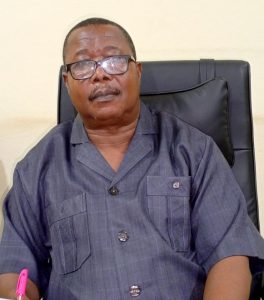
Dr. Abdul Rahman Conteh
The implementation of the Agricultural Technology and Innovation Park (ATIP) project marks a significant milestone in transforming agriculture in Sierra Leone. Funded by the Food System Resilience Programme (FSRP) and the iREACH Programme, and coordinated by CORAF. This project reflects a shared vision for enhancing agricultural productivity, resilience, and sustainability.
The ATIP serves as a hub for advancing agricultural knowledge, providing our farmers and researchers with access to cutting-edge technology and innovative practices. Through this initiative, we aim to empower our agricultural sector with the tools and knowledge needed to address food security challenges, increase yield quality, and promote environmental sustainability.
I extend my gratitude to all partners and stakeholders involved in this transformative journey. Together, we are strengthening Sierra Leone’s agricultural resilience, creating opportunities, and building a brighter future through the Feed Salone Government Initiative.
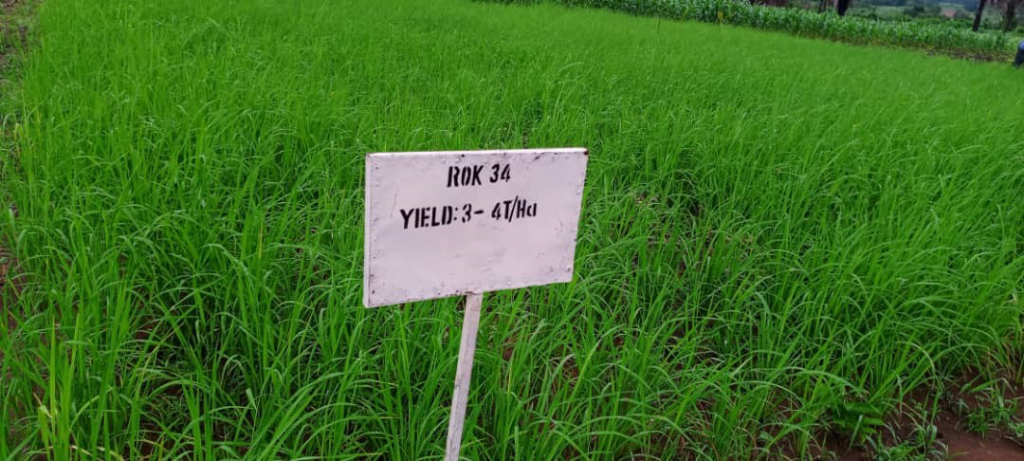
NAME OF TECHNOLOGY: N4, ROK16, ROK3, ROK34, ROK36, NL19.
Lead Scientist: Prof. Monty Jones, Dr. Nabieu Kamara, Mr. Abdul Coolson Kamara
Download a brochure of Technology park: TECHNOLOGY PARK
KEY CHARACTERISTICS
- High yield, which is three times as high as the conventional African species, with a small amount of fertilizer.
- Suitable for African soil resistant to insects and weed competitive
- Quick growth, shortening the growth cycle by 30 -50 days, thereby enabling double cropping and minimizing the drought damage.
- Tolerance to drought and phosphorus deficiency.
- Yield 4 – 5 tons per Hectare
ROK 34
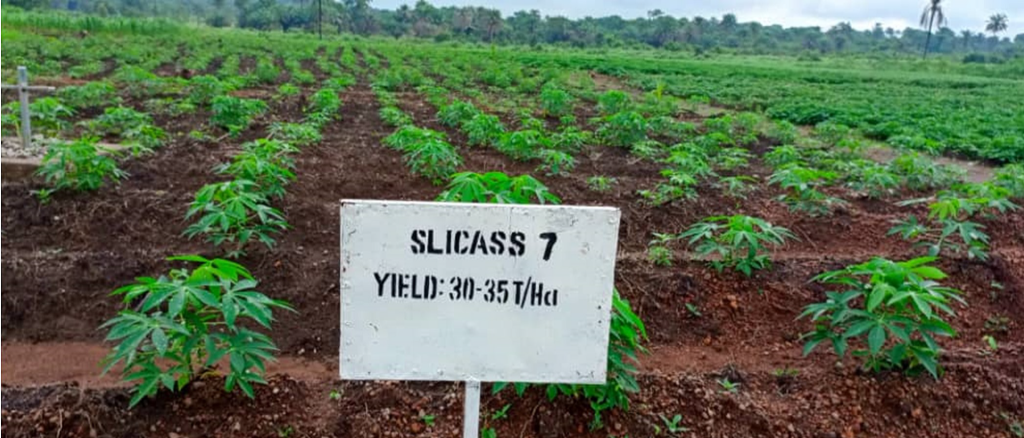
NAME OF TECHNOLOGY: SILCASS 4, SLICASS 7
Lead Scientist: Prof. Abdulai Jalloh & Mr Festus Massaqui
KEY CHARACTERISTICS
- Yields 30 to 35t/Ha
- Has a dry matter of 33.4%
- Resistant to African Cassava Mosiac Disease (ACMD)
- Resistant to Cassava Bacteria Blight (CBB)
- Moderately tolerant to Cassava Green Mite (CGM)
- Sweet and mealy
SLICASS 7
PROBLEM IT IS ADDRESSING
- Improves on food security
- Provides daily calorific requirement
of consumers - Useful in local food industry
- Has high starch content
NAME OF TECHNOLOGY: Coffea canephora
Technology Institution: Sierra Leone Agricultural Research Institute (SLARI)
Lead Scientist: Mr Paul Musa Lahai
Country: Sierra Leone
Contact: Tel: + 232-78-529-842 .
Email: info@slari.gov.sl
Download a brochure of Technology park: TECHNOLOGY PARK
Coffea canephora
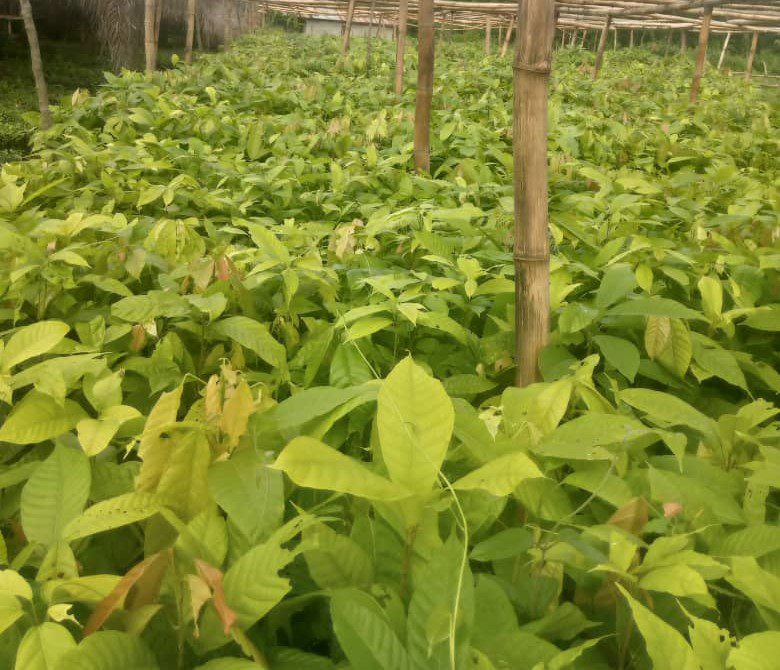
KEY CHARACTERISTICS:
- 6 tons of productivity per hectare
- Plant population per hectare = 2,666
- Planting distance = 2.5 m x 1.5 m
- First flower production occurs 3 years after
- cultivation (having stayed for at least 1.5 years in nursery)
- Resistant to pest/disease
- Proven to be adaptable to changing climate
- Germination percentage of 95%
- Good architecture if properly managed.
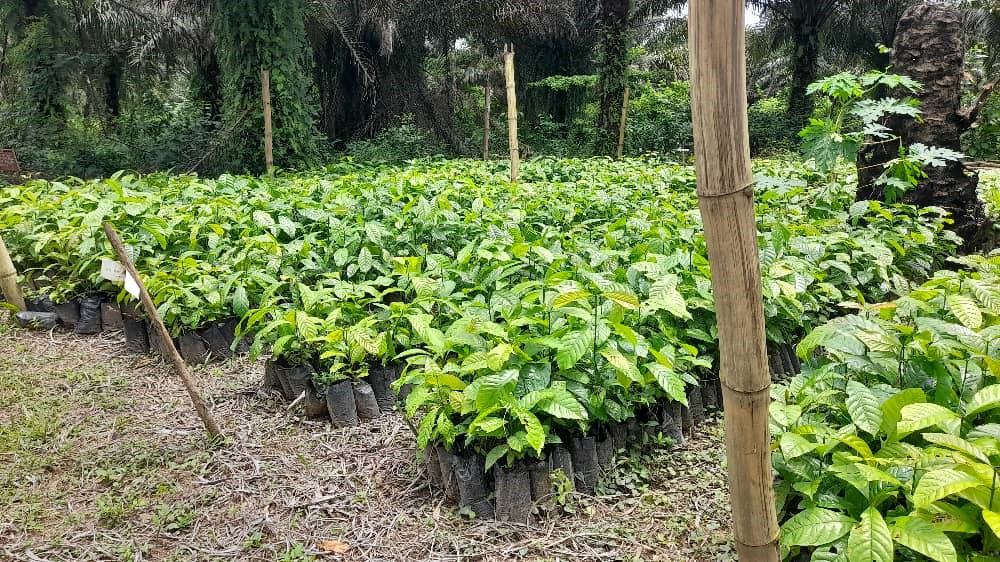
NAME OF TECHNOLOGY: Cacao (Theobroma cacao L.)
Lead Scientist: Mr Paul Musa Lahai
KEY CHARACTERISTICS
- Yield is 300 – 400 tons per hectare
- Planting distance = 3 m x 3 m • Number of plants per hectare = 1,111
- First flower production occurs 3 years after cultivation (having stayed for at least 1.5 years in the nursery)
- Resistant to pests but susceptible to black pod disease (Phytophthora megakarya)
- Adapts to changing climate 7. The germination percentage of dried nuts is 90%
- Good architecture if properly managed.
Theobroma cacao L.
NAME OF TECHNOLOGY: OIL PALM
Lead Scientist: Mr Paul Musa Lahai
OIL PALM

KEY CHARACTERISTICS
- 158 tons of productivity per hectare of clean oil
- First flower production occurs 3 years after cultivation (having stayed for at least 1.5 years in the nursery)
- Resistant to pests/disease if properly managed (toileting, pruning, weed control, and general farm maintenance)
- Proven to be adaptable to changing climate
- Germination percentage of 99% 6. Good architecture if properly managed.
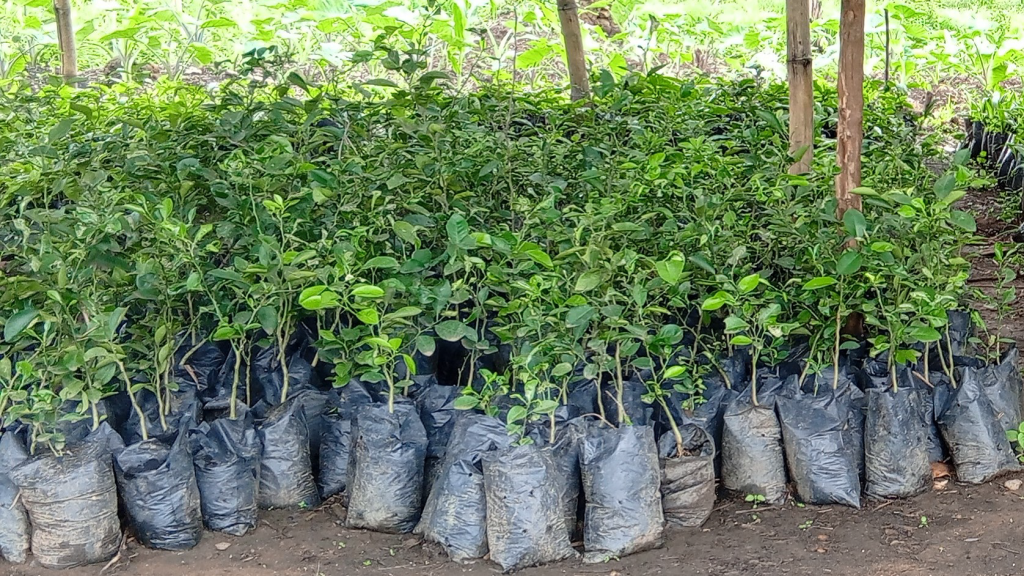
NAME OF TECHNOLOGY: Sweet Orange (Citrus sinensis)
Lead Scientist: Mr Paul Musa Lahai
KEY CHARACTERISTICS
- Yield is 30 tons per hectar
- Planting distance = 7 m x 7 m
- Number of plants per hectare = 204
- First flower production occurs 5 years after cultivation (having stayed for at least 1.5 years in the nursery)
- Resistant to pest/disease
- Adapts to changing climate 7. The germination percentage of dried nuts is 90% 8. Good architecture if properly managed
Sweet Orange (Citrus sinensis)
NAME OF TECHNOLOGY: PVA-SYN3, 9, 13, & DT-STR-SYN14
Lead Scientist: Mr. Sayo Sesay, Mr. Musa Swaray, & Dr. Nabieu Kamara
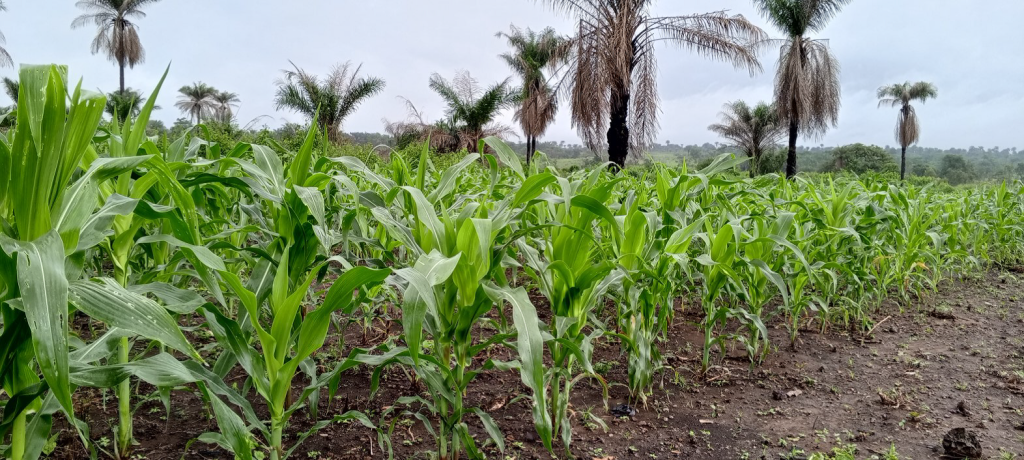
PVA-SYN3, 9, 13, & DT-STR-SYN14 (Maize)
KEY CHARACTERISTICS
- PVA SYN 3 is a pro-vitamin A synthetic maize (Zea mays) variety belonging to the Poaceae family. The variety is carotene fortified variety which is a precursor of vitamin A. Vitamin A plays a crucial role in reproduction, vision, and immunity in humans
- The variety yields about 5 tones per hectare, a duration of 90 days, and an average height of 138 centimeters. It is resistant to maize streak virus (a dominant disease in farmer’s fields) and has shown high vegetative performance making it important for fodder in small ruminant farms.
- PVA SYN 3 has shown drought-tolerant characteristics when cultivat-ed in the dries.
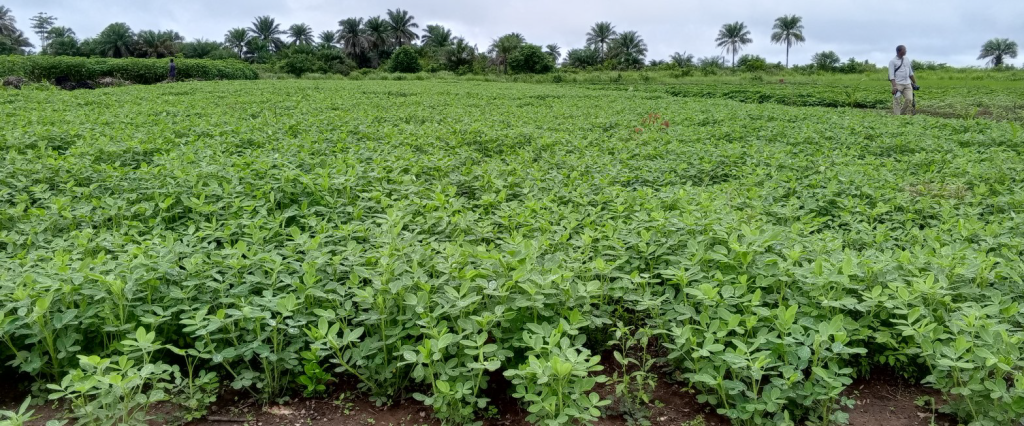
NAME OF TECHNOLOGY: SILNUT 2 (Groundnut)
Lead Scientist: Mr. Milton Kabia
KEY CHARACTERISTICS
- The crop grows at a height of 42.8 cm with a growth habit that is erect;
- It takes between 25 to 50 days towards 50% flowering
- Seed size is medium with a shelling percentage of 75 to 80
- Its hundred mass weight is 43 to 45 while its seed color is tan
- Drought-tolerant variety
- Replenishes soil fertility by fixing Nitrogen into the soil.
- Yield is 2 – 3 tons per Hectare
SILNUT 2 (Groundnut)
The video is about the impact which SLARI Agricultural Technology Innovation Park has created in the lives of farmers especially youth farmers.