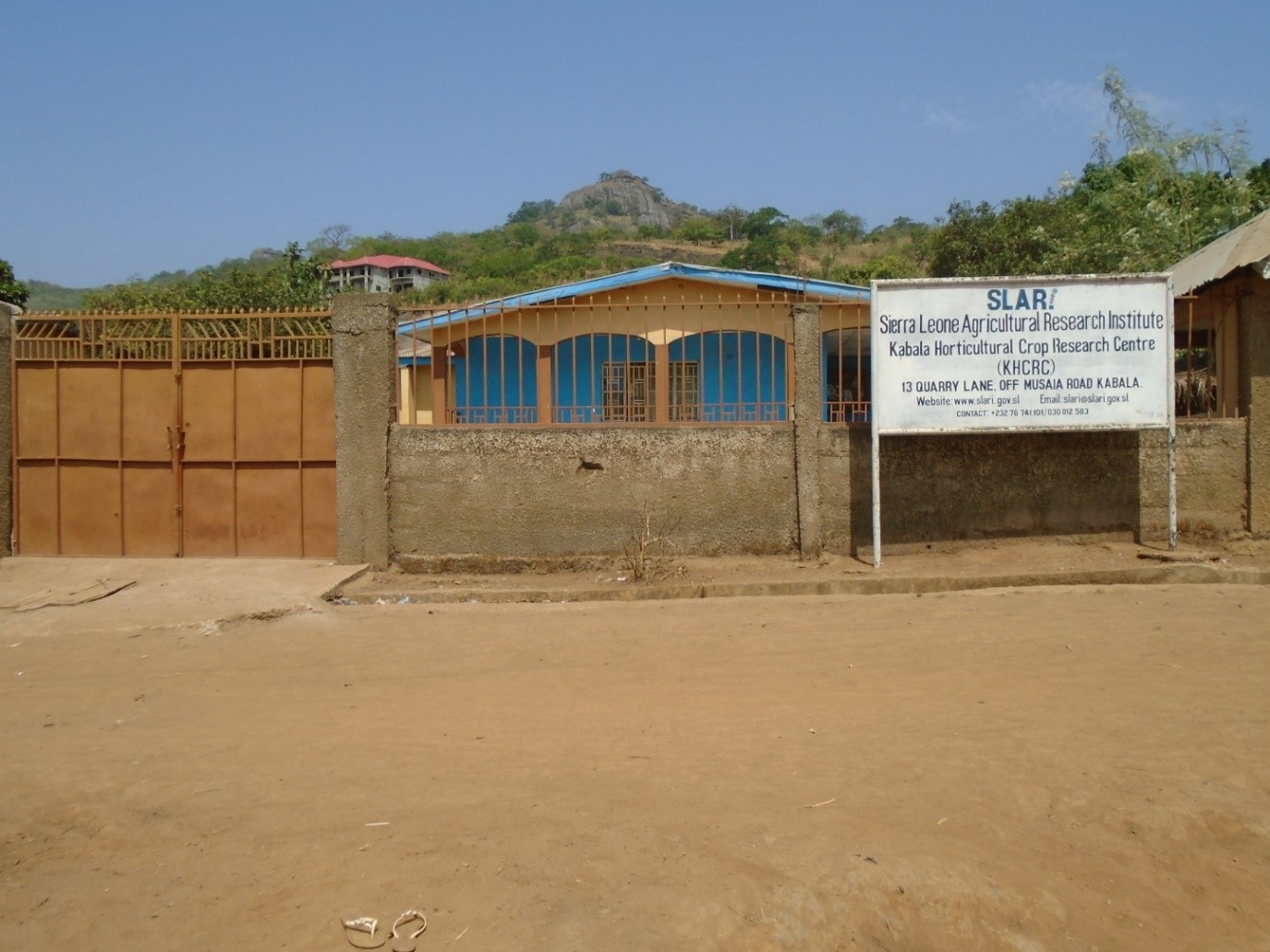
Kabala Horticultural Crops Research Centre
 Slari Web Admin
Kabala Horticultural Crops Research Centre(KHCRC)
Introduction
The Kabala Horticultural Crops Research Centre (KHCRC), one of the six currently operational centres of the Sierra Leone Agricultural Research Institute (SLARI), is mandated to conduct research and development activities on vegetables (indigenous and exotic), fruits (indigenous, tropical and temperate), herbs and spices and medicinal and ornamental plants.
Operationally, KHCRC’s current activities fall under five thematic areas that apply to all crop value chains at KHCRC:
- Germplasm and Seed Systems;
- Natural Resources Management;
- Farm Management;
- Socioeconomics, Policy, and Outreach;
- Postharvest, Nutrition and Food Technology
Mission
The Mission of KHCRC is to enhance sustainable productivity, commercialization and competitiveness of the horticultural crops by generating and promoting innovative horticultural crops technologies and empowerment of stakeholders.
In line with the Mission of SLARI, the results areas for KHCRC are summarized as:
- Appropriate root, tuber and grain legume crops product value chains technologies and innovations generated and promoted.
- Appropriate markets and marketing strategies for enhancing root, tuber and grain legume crops product value chains developed and promoted.
- Appropriate policy options for enhancing root, tuber and grain legume crops product value chains facilitated and advocated.
- Capacity for implementing root, tuber and grain legume crops product value chains research strengthened.
- Appropriate mechanisms for managing, sharing and up scaling root, tuber and grain legume crops knowledge, information and technologies established and operationalized
To contribute significantly to the attainment of the overall institutional specific objective, the Horticultural Crops Programme shall focus on seven product value chains outlined below. The importance of each product value chain in contributing to the national economic growth and agricultural sector development as well as improvement of livelihoods, income generation and food security shall be determined through prioritization process discussed in chapter three. The allocation of resources for research shall then be based on the results of the priority setting process. Each of the intervention strategies to be carried out under each product value chain shall be expected to contribute to the attainment of the seven Programme strategic results.
Development and promotion of Indigenous Vegetables product value chains.
Development and promotion of Exotic Vegetables product value chains.
Development and promotion of Herbs and Spices product value chains.
Development and promotion of Tropical Fruits product value chains.
Development and promotion of Temperate Fruits product value chains.
Development and promotion of Indigenous Fruits product value chains.
Development and promotion of Ornamental and Medicinal Plants product value chains.
Among the seven crop value chains, the indigenous and exotic vegetable, and herbs and spices product value chains have received considerable attention at KHCRC. To date little or no research activities has been conducted on the fruit, medicinal and ornamentals due to limited funding.
Funded Project: EU BAFS Project
Background
The horticultural sector has gained importance because of the increasing demand for vegetables and certain spices and a greater awareness of their nutritional values. Besides, the Government is pushing for self-sufficiency and the import substitution of vegetable crops. Large quantities of horticultural crops are imported from Guinea, Holland, and other countries. The UN Com Trade database gives the 2015 values of imports of “edible vegetables and certain root and tuber crops” as $13.6Mill and exports of $0.14Mill. Exported vegetables included chilli pepper and garden eggs.
Expected results and outputs
R2.1: IVM of vegetable varieties
- At least 5 varieties/crops for 10 majors vegetable crops will be tested during 4 years and 2 varieties will be selected
- Production of seeds will enable the development of the vegetable field as following:
- Year 2: 500 ha, Year 3: 750 ha, Year 4: 1,000 ha
- 2 ha of multiplication plots producing IVM of 2 varieties for 10 major vegetables (20 types of seeds) from Year 2 to A multiplication system is in place outside the station for mass seed production
R2.2 Introduction and development of new crops
- 5 Underutilized and 5 new crops are characterized, tested and producing available seeds
- Production of seeds will enable the development of the vegetable field as following:
- (Year 3: 500 ha, Year 4: 750 ha)
- A multiplication system is in place outside the station for mass production of IVM
R2.3 Integrated Pest Management (IPM)
- At least one control measure is elaborated for each harmful pest/disease identified (9), and are disseminated to farmers within 4 years
R.2.4 Mushroom production
- At least 5 mushroom types are identified & tested and 2 commercials selected for large spawn production
R2.5 Climate change Adaptation: CCA
- Experimentation on existing techniques to mitigate climate change and selection of the 3 most pertinent for vulgarisation
Key Achievements
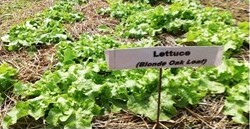
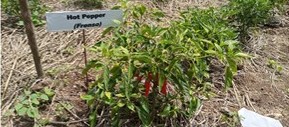
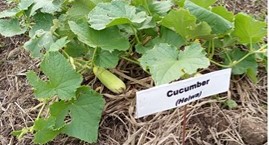
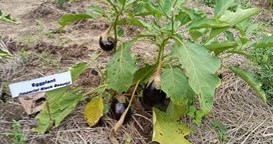
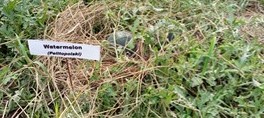

Photographs of some of the vegetables multiplied