FSRP, IITA, SLARI, MAFS and Partners Conclude a Four-Day Training Workshop on Portion Size Estimation Methods
-
by
slari
- No Comments on FSRP, IITA, SLARI, MAFS and Partners Conclude a Four-Day Training Workshop on Portion Size Estimation Methods
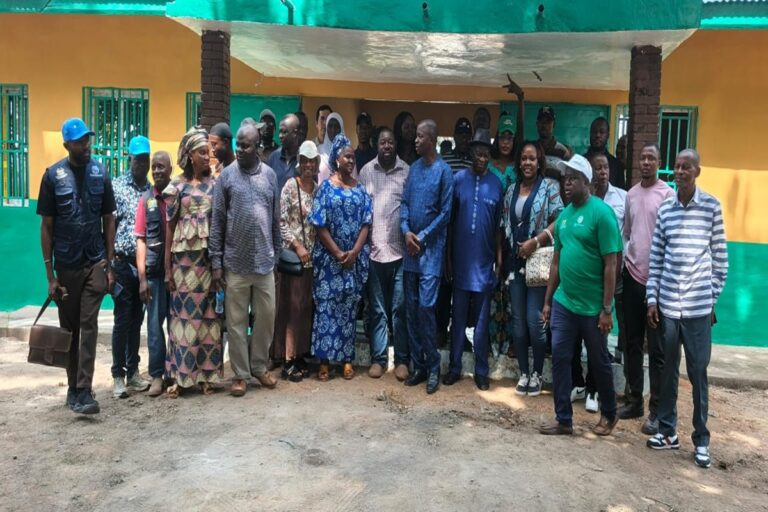
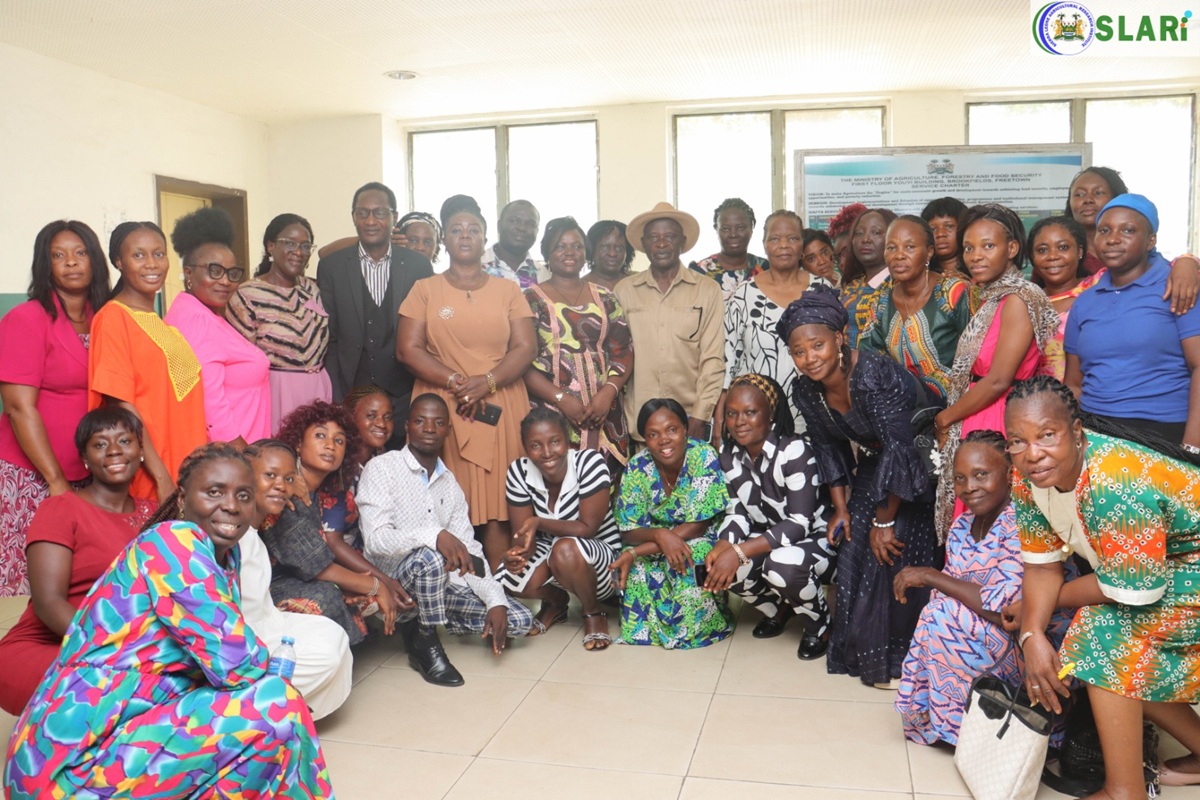
On Thursday, 22 January 2026, the International Institute of Tropical Agriculture (IITA) in collaboration with the Sierra Leone Agricultural Research Institute (SLARI), Ministry of Agriculture and Food Security (MAFS), Ministry of Health (MOH), Njala University, and Scaling-Up Nutrition (SUN) has successfully concluded a four-day training workshop on Portion Size Estimation Methods at the MAFS Conference Hall, Youyi Building, in Freetown.
The capacity-building workshop; brought together participants from MAFS, MoH, and SLARI with the objective of training participants on selection of portion size estimation methods in preparation for developing a database that will be used to convert the quantity of food or mixed dish consumed into the grams for the planned dietary component of the National Food Consumption and Micronutrient Survey (NFCMS).
The training attracted high-level participation and technical expertise, including the Deputy Minister II of the Ministry of Agriculture and Food Security, Mr. Sahr Hemore, the Deputy Chief Agriculture Officer, Mr Joseph Thorlie, the Permanent Secretary represented by the Deputy Permanent Secretary, Mr Sundy Marah, the Director of Nutrition at the Ministry of Health, Mrs. Millicent M. Allie. Also present were Dr Busie-Maziya Dixon, IITA Food and Nutrition consultant, Component lead, Dr Martha S. E. Williams-Ngegba, co-Component lead, Mrs Memunatu Sawi from the Njala University, Mrs Bernadette Allieu from the SUN and Food Systems Coordinating Unit (SUN/SFCU), SLARI researchers, nutrition specialists, and policymakers.
Throughout the four days, participants were taken through practical and methodological approaches to portion size estimation, emphasizing standardized tools, culturally appropriate measurement techniques, and the importance of accuracy in dietary assessment. The sessions were highly interactive, combining technical presentations, hands-on demonstrations, and group discussions aimed at aligning national approaches to food consumption surveys and nutrition assessments.
Speaking during the engagement, stakeholders underscored the importance of reliable data in shaping nutrition-sensitive agriculture, health interventions, and food system policies. Accurate portion size estimation, they noted, is critical for understanding dietary patterns, informing national nutrition surveys, and supporting evidence-based decision-making.
The workshop forms part of a broader effort under the Food Systems Resilience Programme under the supervision of the Ministry of Agriculture and Food Security, supported by partners, to strengthen institutional and human capacity across the agriculture, health, and nutrition sectors. By equipping frontline nutritionists, women leaders in agriculture, and government staff with practical skills, the initiative contributes to improved programme design, monitoring, and policy formulation.
The successful conclusion of the training marks another milestone in advancing data-driven food and nutrition programming and reinforcing cross-sector collaboration among agriculture, health, and research institutions. Ultimately, the knowledge and skills gained are expected to contribute to improved health outcomes and a more resilient and inclusive food system for the people of Sierra Leone.