
A team of scientists from the Sierra Leone Agricultural Research Institute (SLARI) has shed new light on the country’s indigenous chicken breeds and their resistance to antibiotics. The study, recently published in the Journal of Fisheries, Livestock and Veterinary Science, examined 150 chickens from across Sierra Leone to understand both their physical traits and the risks posed by antibiotic resistance.
The researchers identified five distinct ecotypes of chickens: Frizzle, Kebu, Naked Neck, Normal, and Straw. While most breeds showed little difference in size and appearance, the Kebu breed stood out for its heavier body weight, longer shanks, and larger neck size. This suggests the Kebu could play an important role in boosting local poultry production if properly improved and bred.
Interestingly, physical traits such as orange and yellow eye colours and brown and yellow beaks were dominant across the breeds. The single comb type was the most common, while the Kebu breed was unique for its 100% grey shank colour. These findings help build a baseline for genetic improvement programs aimed at making chickens more productive while still adapted to local conditions.
Beyond physical traits, the study also analyzed E. coli bacteria isolated from chicken fecal samples. Out of twelve antibiotics tested, resistance was only detected in three:
- Sulphathiazole (96.2%) – showing very high resistance
- Ampicillin (34.6%)
- Chloramphenicol (3.8%)
Alarmingly, the E. coli isolates from the Kebu breed showed resistance to all the antibiotics tested. Yet, the good news is that the bacteria were 100% susceptible to cefepime (a 4th-generation cephalosporin) and more than 94% susceptible to other cephalosporins. Importantly, no multidrug resistance was detected, which is a positive sign for public health.
Poultry is considered the “livestock of the poor,” providing affordable protein to households across Sierra Leone. However, rising antibiotic resistance could threaten both food safety and human health, especially since backyard chickens live in close contact with people.
The authors recommend restricting the use of antibiotics in poultry production and call for further studies on clutch size, egg production, and meat yield of indigenous breeds. By improving local chickens while protecting against antibiotic resistance, Sierra Leone could strengthen its poultry industry and enhance food security.

Field data collection exercises on local chickens

Assembled local chicken germplasm in the building
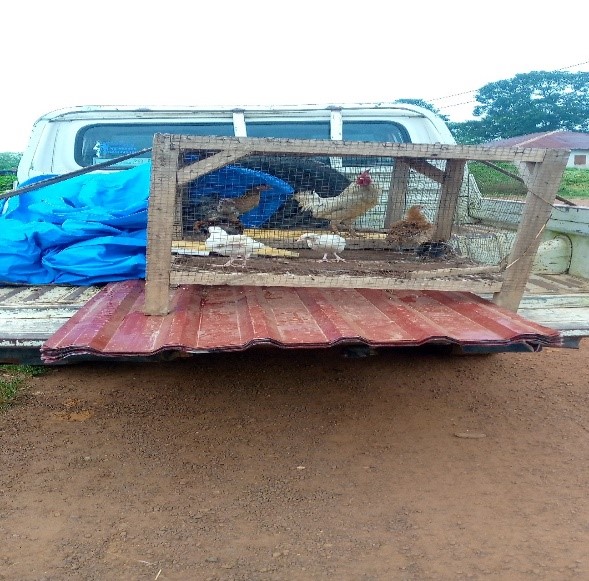
Assembled local chickens in a truck